Dear reader,
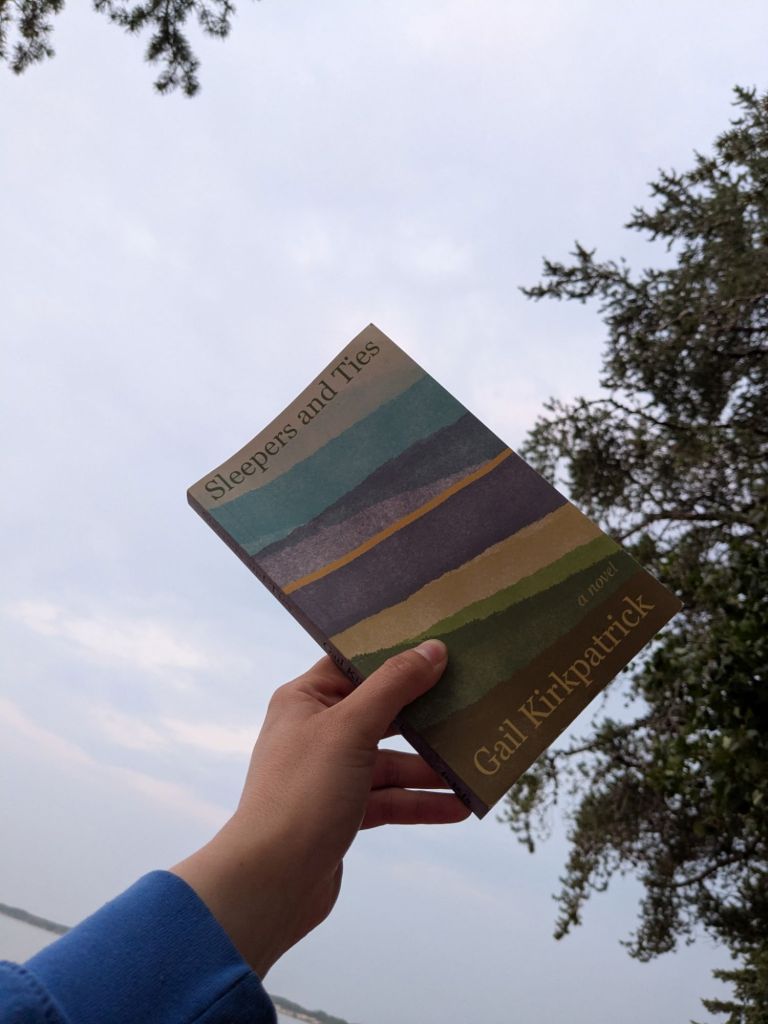
My TikTok algorithm eats up my protective prairie rage as of late and keeps feeding me videos from white dudes with mediocre stubble that pan across the Rocky Mountains with the caption of something like “Saskatchewan is so beautiful” or “the prairies could never”. Now I love me some Rockies, but the comment sections are always filled with yuppies (find me a better word, I’ll swap it out) who have never left Toronto or Vancouver or any sort of comfort zone chiming in with a cacophony of “I drove through the prairie provinces once, so flat it gave me anxiety” and “there’s literally nothing to see there, love the mointains”. And oh, believe me, I know I shouldn’t interact, because the algorithm will send me more the same lazy content, but I fall for it every time, because it makes me so damn mad from every corner of my soul, for reasons I’ll fill you in on, but let me first tell you the antidote for this rage as of late: Gail Kirkpatrick’s debut novel from Now Or Never Publishing, Sleepers and Ties.
Sleepers and Ties has been sitting on my To Be Read and Reviewed pile for quite some time. I wish I could be an orderly reviewer who could read books in the order received, read and review prior to publication date, and have all my social media ducks in a row to properly support my fellow writers and literary colleagues in the most efficient manner possible as they navigate the menacing behemoth that is modern day publishing. Alas, I am an Aries with ADHD, four cats, a tortoise, a human child, a full time job and a motley assortment of other responsibilities, so the tiny amount of orderliness that the universe and Concerta allots me each day is usually first awarded to my day job, to getting my child to her activities relatively on time and relatively in one piece, making sure my own paid writing gigs are attended to, and everything else is seat-of-my-pants, intuition and crossed fingers.
I’m transparent about this with publishers and publicists though, and while some might think it a bit woo-woo, I think the right book will hop into your hand when it wants to be read. Or the tiny bookshelf elves will yeet it into your bag when its time. Whatever literary spiritual denomination you abide by, truly. The stars aligned again and in my panic to pack and hit the highway for a family camping trip this week, Sleepers and Ties randomly made it into my duffel bag, and it coincidentally fit the scenery for our trip so well.
The whole trip, I was driving to and fro with Margaret, truly. The book opens up with main character Margaret returning to Saskatoon, Saskatchewan, and eventually her (what I presumed to be fictional, based upon my google search) fictional hometown of Plover to sort out the will and final wishes of her recently passed, younger sister, Shirley. The scenery described as Margaret drives out to Plover Lake to spread her sister’s ashes, or navigates Saskatoon to meet with the lawyer, or reconnects at the homestead of her childhood friend, Massy, are all the specific locales or similar Saskatchewan landscapes I’ve driven the past week or so through Canora and Springside to camp in Good Spirit, or to visit loved ones in Saskatoon. To see the little details of the same landscapes and scenes poetically detailed like little love notes throughout each chapter was a refreshing contrast to the brash TikTok mountain hard-on prairie-haters on my feed earlier on in the week.
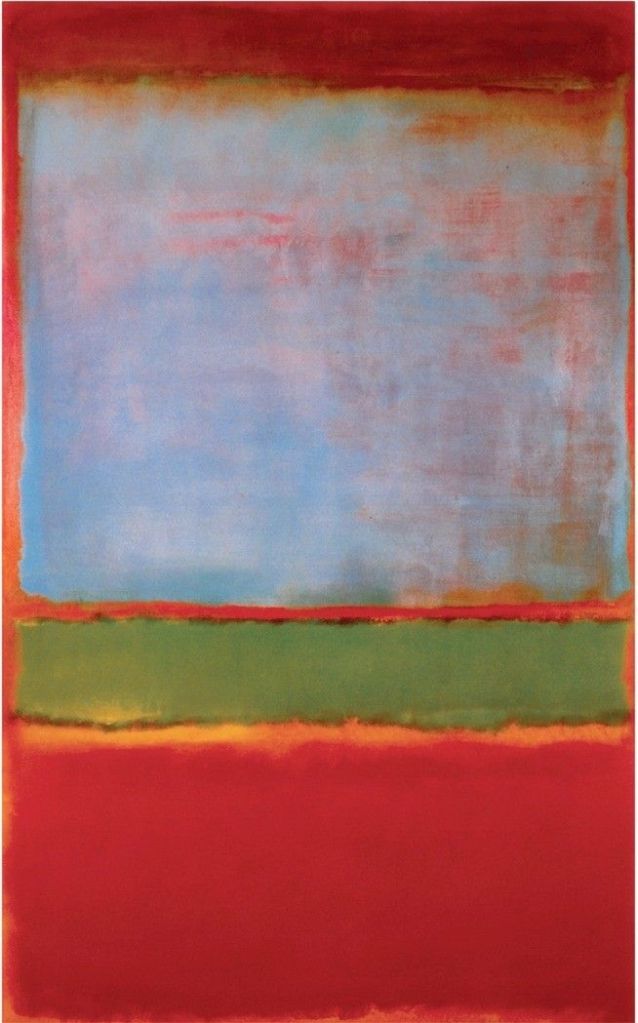
Like, um hello: “In contrast to my hurrying out to Plover on my day of arrival, I notice that fields of spring wheat and canola catch the air, quick proof of the existence of wind, and without mountains or forests to obstruct, the horizon is an infinite tease, the cars, mirages that never seemed to arrive. I’ve fallen into a Rothko painting, the pavement just a lead line drawn between blue and green halves. For miles along the highway, worn shoes have been placed over fence posts.” (Page 59, Chapter 9, Buffer) I am instantaneously well again. That is the respect my dear Saskatchewan deserves, dear TikTok dude bros. An example of a Rothko painting included below for reference (I see what ya did there with the cover, Shannon Hayward 😎)
Post mortem, miss Shirley drops a bombshell on big sis Marvel (Margaret): here’s a cold EIGHT MILLION DOLLARS you had no idea about. Oh, and pretty please, revive a rail line ala what our also deceased father would have wanted. Major side quest reveal.
Marvel is in a delicate place, physically and emotionally. Her husband, who I am quite biased towards, hasn’t bothered to tag along from Vancouver to help Margaret/Marvel with any of this. Her three grown adult sons are off gallivanting across the globe, too emotionally stunted to contemplate that their mumsy has lost her last immediate family member and might just need a lil support right about now. Her parents are previously deceased. Detached from her roots, she must reconnect with her childhood friend Massy (BUT there is lingering resentment and secrets) an old family friend named Adam (he’s a good old sport, we stan Adam in this household), and otherwise rely on a condescending lawyer and new connections her sister has mysteriously forged in the name of this train line, to iron out what exactly Shirley wanted and negotiate within herself how much of this request she needs and wants to fulfill.
Without spilling too many of the secrets, because why in the world would I steal that joy from you?, this story explores small and big tragedies and secrets from a small town that had been left uncovered for far too long, a woman whose own needs and boundaries have been left unattended for far too long (God I was SCREAMING at Hetty, IYKYK), friendship, midlife, ethnoornithology (I learned a new word, thank you, Gail!), trains, modern agriculture, small town woes, sisterhood, trains, fighting corporate greed and sticking it to the man, ROMANCE (we. Love. George.), and returning home, migrating if you will, adapted.
This book just crawled under my arm and into my heart for so many reasons. While in university I used to work in an old hundred year old CN train station that had been converted into a spa. I spent hours cleaning every nook and cranny of that place and exploring its super sketchy old timey basement, daydreaming about what it used to be like. My parents hail from two very small Saskatchewan towns, one that is still quite healthy and one that is nearing ghost town status. The agricultural landscape, the trials and tribulations Plover faced, the intergenerational farming conundrums, the hatred for farming megafarmers eating up their neighbours like a bloated Pac-Man with no self awareness (oh lord do I have stories for a round of paralyzers) — those stories are all things I grew up in and around and hearing. I kept thinking to myself, ” Yep! That’s a thing!”. It just felt like so many complex psychosocioeconomic and cultural factors local to me had been touched on in a knowledgeable way, but not in a way that would alienate readers who did not grow up in and around this.
I could very well cry writing this next little bit, but the portion about Margaret/Marvel returning home, her apprehension in doing so, and finding her stride between Vancouver and Saskatchewan amid her curatorial career brought me so much joy. I hope I do not botch or offend with my explanation of this, but as someone in the arts and a young-ish person from a rural-ish place in general, a lot of people leave. They leave either because they actually do not have opportunity here, they perceive they do not have opportunity here, or they need to explore and find themselves. And that is all valid! But what breaks my heart is when people, like the fictional character of Margaret, feel like they cannot come home, or do not realize the amazing things they either had all along at home, or have been growing at home while they were gone. Lately, I have been seeing so many friends and acquaintances move back home to Saskatchewan for a variety of circumstances, good and bad. But what has been lovely is the warm welcome they’ve received, and how pleasantly surprised they’ve been at discovering how the arts community has grown in their absence (or in some cases, existed there the whole time without their knowledge). This personal and professional observation of exodus and return seemed to align with some of Margaret’s journey, and I was just delighted.
Also, the last lines of the book were splendidly satisfying. No notes.
Once this rain lets up for a few minutes, my lovingly marked up review copy, signed by Gail, will be in the Good Spirit Lake Provincial Park beach Little Free Library. Thank you NON Publishing for the review copy!
Wishing you all a cozy rainy day, reading inside, with a good book and your favourite beveragino,
Andrea
xoxo



 Andrea Martineau